
Earwax, or cerumen, is naturally made by glands in your ears to keep the ear canals lubricated and to help block dust and debris from reaching deeper inside.
Earwax usually moves out of the ear on its own through chewing and jaw movements, but sometimes it can build up and cause a blockage.
Symptoms of a cerumen blockage include:
- Ear pain
- Tinnitus (ringing of the ears)
- Decreased hearing
- Ear fullness
- Dizziness
If an earwax blockage occurs, it may need to be removed. This can be done at home or at your audiologist’s office, depending on the size and severity of the occlusion.
At-home Earwax Removal
In some instances, a physician or audiologist may send patients home with an at-home earwax removal kit. Earwax removal kits can also be purchased over the counter in most drug stores.
These kits generally consist of a liquid that softens earwax and a small rubber bulb syringe. You will be given directions on how much and how often to apply the liquid to your ear canals, allowing it to sit in your ears for a short amount of time to soften up the earwax. Bubbling and fizzing sensations in your ears are normal with use. You will then use the bulb syringe to gently flush your ears with warm (not hot) water to remove the earwax.
Clearing earwax blockages can take several days to fully resolve. Using earwax removal kits may carry risks for some people, especially those with certain ear conditions. Before attempting at-home earwax removal, it is advised to speak with your audiologist to be sure it is safe for you.
Removal at Your Audiologist’s Office with Earigator™
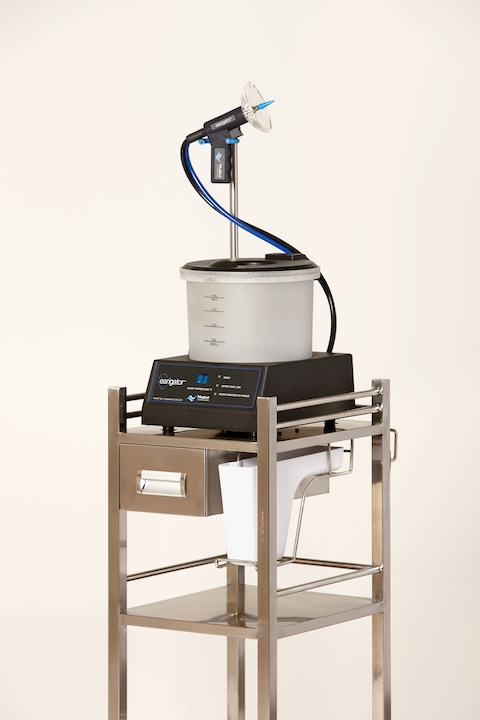
If the earwax blockage is more significant, it may need to be removed at your hearing care professional’s office.
Irrigation is the most common method your audiologist will use to remove blockages. The Earigator™ Cerumen Management System was designed by an otologist to be a safe and highly effective earwax removal method. The irrigation system carefully controls the water flow and temperature, while allowing the professional to see into your ear for effective and painless removal of excess wax.
Earwax Removal Methods to Avoid
Many people use cotton swabs to remove earwax or clear a blockage, but this can actually make things worse. Cotton swabs often push the wax deeper into the ear canal, which can lead to more serious problems or damage. Cotton swabs themselves can also be accidentally inserted too far into the ear canal and can compact wax further or even puncture your eardrum.
Audiologists (AuDs) and Ear, Nose, and Throat doctors (ENTs) generally agree that cotton swabs are a bad idea for removing earwax. You should never insert cotton swabs or any small object into your ear canal.
If you experience pain or discomfort as a result of earwax or suspect you have a blockage, it’s important that you see your audiologist as soon as possible to address the issue. Removing earwax doesn’t have to be uncomfortable and should bring you relief.